

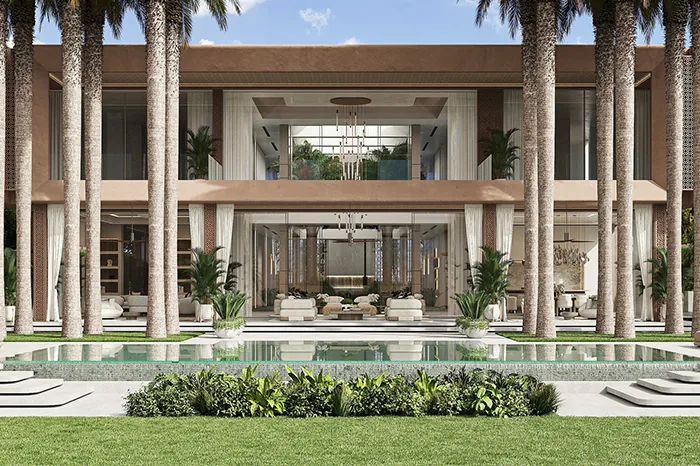
Some companies explain what they do. Others make you feel it as soon as you understand their thinking. UDesign belongs to the second category. When Jason Harris talks about the architectural design process at UDesign, it does not sound like a pitch. It sounds like a way of thinking about homes; one that removes confusion and replaces it with clarity. A home, in his view, should never feel like a collection of disconnected decisions. It should feel like one idea carried all the way through.
That is where the conversation begins.
“One Company with One Objective”
When asked about the mission behind UDesign, Jason does not elaborate with marketing language. He keeps it direct.
“One company with one objective: to design, build and furnish beautifully detailed contemporary homes.”
There is a pause after he says it, not because he is searching for words, but because there is nothing to add. From the first sketch to the final space, everything is meant to belong to one process, one vision, one outcome.
Why an Integrated Architectural Design Process Matters
Jason does not talk about competition first. He talks about fragmentation as the very problem that UDesign’s architectural design process is built to solve.
He describes how clients are often forced to move between different worlds. One company for architecture. Then an interior design studio. And then another for construction. Each doing its job well, but rarely speaking the same language.
“The value is that there is one place to go where clients can get all of these things, rather than dealing with several different entities who are not communicating with each other.”
He is not criticising the industry. He is pointing out what happens inside it. When each part of a project is handled separately, something gets lost, not necessarily in quality, but in connection. And for Jason, that connection is what defines a home.
“When several companies focus only on their own interests, nobody is really thinking about the whole project as a home.”
Designing from the Inside Out: How UDesign Begins Every Project
Jason’s approach to the architectural design process is where his thinking becomes most personal. It does not start with walls or structures. It starts with how a space will actually feel to live in.

“We firstly start with the rooms, spaces, and of course the view of the plot, and then we build out rather than make a floorplan and work in.”
It is almost the reverse of how most people imagine architecture works. If you begin with furniture and real living spaces first, everything else follows naturally.
“If you just take a room without thinking about the furniture, then you’ve got to figure out the best possible way to put furniture in that room afterwards.”
But if the life of the space comes first, the structure becomes easier, more natural, more usable. And then he says something that stays with you.
“At the end of the day we live inside the house and not out in the streets looking at the house.”
Where the Architectural Design Process Becomes Real: The UDesign Showroom
At one point in the conversation, Jason naturally shifts to the moment clients first step into the showroom. For him, this is where the entire architectural design process changes because until then, everything exists only as design.
“These days everyone is selling 3D designs, and of course in the 3D world things look great and things look perfect. In the real world, very rarely what you receive is exactly the same as the 3D visualisation that you initially saw.”
This is exactly where UDesign positions itself differently.
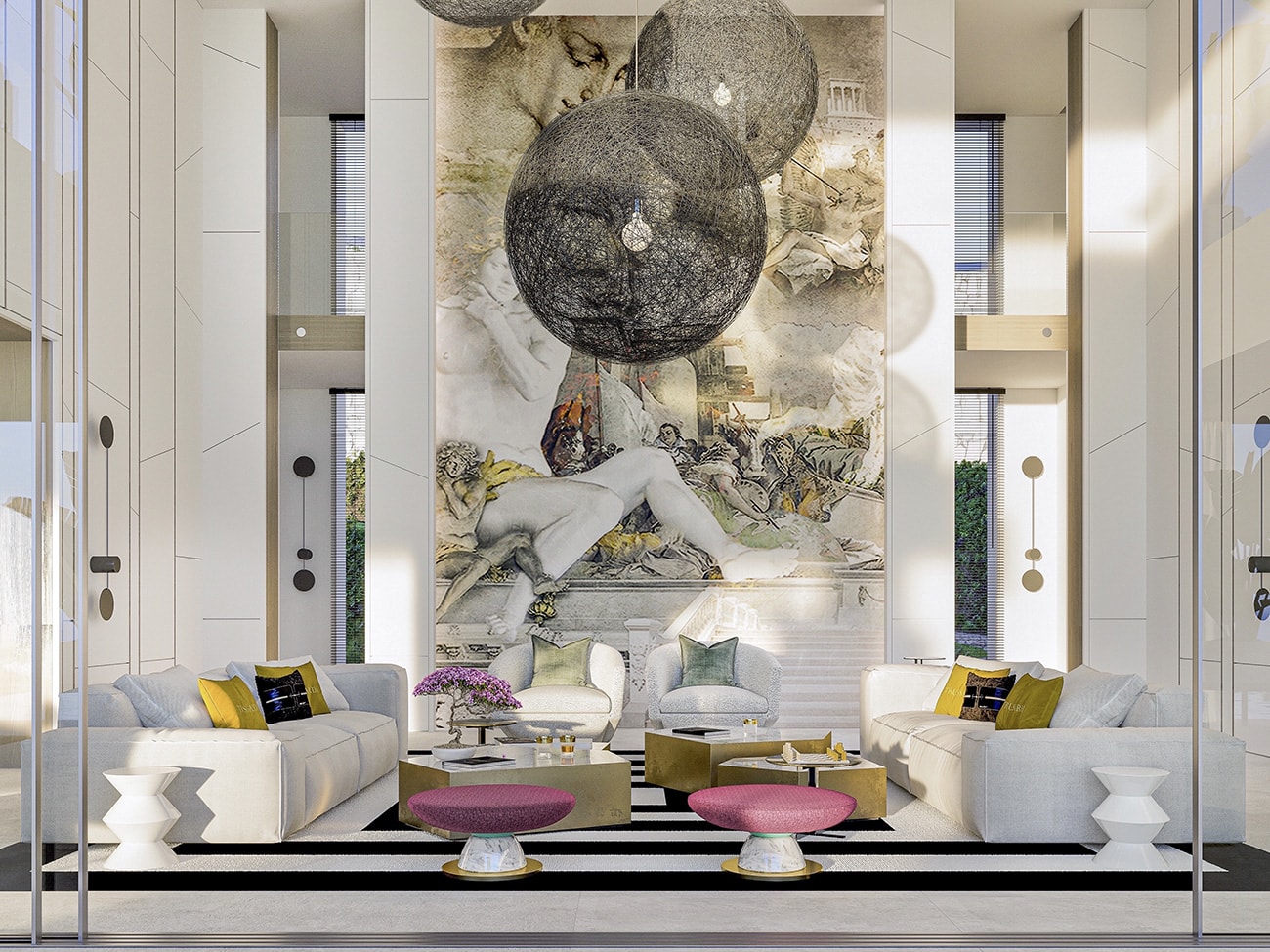
“In our showroom, the moment they enter, immediately they will start to see furniture, walls, floors, taps, sinks, lighting, materials, accessories.
All of these real physical things would have already been placed in the 3D visualizations, so immediately they will be able to see elements of their design in reality that have been given virtually.”
“So, all of a sudden this virtual world is becoming a real world, with real things, and that gives the customers peace of mind to know that their 3D visualizations will actually be replicated in the real world with real materials.”
3D Visualization: A Decision-Making Tool in the Design Process
When the conversation turns to 3D visualisation, Jason becomes very direct about its purpose. For him, it is not a presentation tool. It is a decision-making tool. A core part of the architectural design process.
“If they are done accurately, they are priceless.”
When a visualisation truly reflects what will be built, it removes almost every layer of doubt. Clients are no longer trying to imagine how things might look. Rather, they can already see it, understand it, and refine it before anything is produced.
“There is nothing worse than spending a lot of money and not liking something.”
The goal, as Jason makes clear, is not to impress with visuals. The goal is to make sure that what is chosen is exactly what is delivered.

Details That Define the Outcome
When Jason talks about completed projects, he does not focus on scale or complexity. He talks about proportion.
“You will be able to see the space in each room and how the furniture layout is optimised.”
There is a balance he refers to often that’s not too full, not too empty, just right for how people actually live. And because UDesign has its own production capability, that balance is never limited by standard dimensions.
“If you need a sofa four meters by three meters, we can create that in any colour and size.”
Lighting: The Step in the Design Process That Breathes Life Into a Space

Lighting is the point in the conversation where Jason’s tone shifts slightly. It becomes less about structure and more about feeling. Essentially, about what a space becomes once it is lived in rather than simply designed.
“Lighting is probably one of the most important aspects of design.”
For him, it is not something added at the end for effect. It is something that defines how every other element is experienced. The best materials, the finest furniture, even the most carefully designed layouts do not reach their full potential without it.
“Lighting breathes life into your interior design.”
It highlights textures, brings attention to architectural details, defines zones within a space, and creates atmosphere where there was none before. A living area becomes warm. A dining space becomes intimate. A hallway becomes part of the experience rather than just a transition.
The Exterior as an Extension of the Interior Design Process
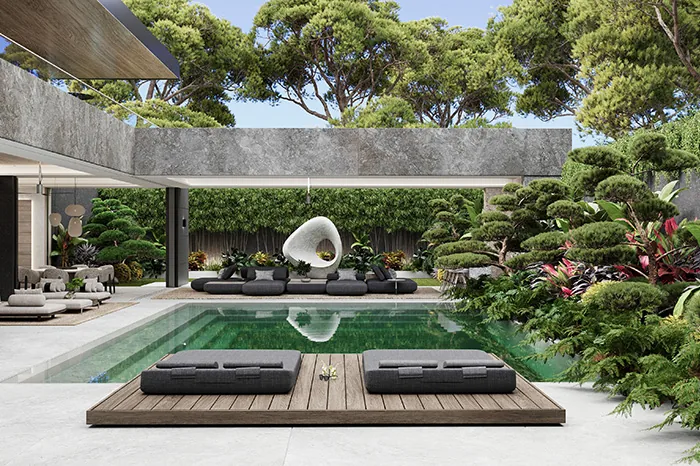
At UDesign, the conversation about a home never really ends at the walls. Jason makes it clear that the exterior is not a secondary thought, but part of the same experience of living in the space.
“Landscaping for us is like furniture is inside – the plants, trees, and lighting are the furniture for the outside.”
People often underestimate this, Jason explains. But the garden becomes one of the most present parts of a home, especially at night.
“Especially at night, when the garden is the star of the show. You could have a beautifully designed interior, but if your garden isn’t thoughtfully designed, you are staring at it all evening and night, and it will have an impact on how the inside feels.”
What Actually Makes the Design Process Succeed: Project Management
There is a shift when the conversation moves to execution. The tone becomes more grounded.
“Designing a beautiful home is not so difficult if you know how to do it. What is really difficult is having great project management and a great team who can execute on time.”
He does not romanticize it. He makes it practical.
“It is actually the project manager, leading the team and how they work together, that is the key to a successful project.”
Ideas are only the beginning. Delivery is where everything is proven.
Sustainability Built Into the Architectural Design Process
When the conversation turns to sustainability, Jason does not separate it as a side topic. For him, it is already part of the foundation of how UDesign works and a key part of how the architectural design process is considered from the very beginning.
He refers to Villa Alcuzcuz as a clear example.
“Our Villa Alcuzcuz was actually the first luxury passive house designed in Spain. It was built in La Reserva de Alcuzcuz, and a passive house means that the insulation of the house and the materials used in the house are as eco-friendly as possible.”
Even though the property measures 1,350 square meters, the electricity and water bills are the same as a two-bedroom apartment. There is no wastage.
“Every material we chose was conscious of sustainability, and that is very important going forward, because we want all of our designs, houses, furniture, to be made from materials and in such a way that it is sustainable.”
Closing
By the end of the conversation, there is no need for summary.
What stays with you is not a list steps in the delivery of architectural design services, but a way of thinking. A home is not built in parts. It is created as one idea, carried consistently from the first moment to the last detail.
And that is exactly how Jason Harris describes UDesign.
One company with one objective: to design, build and furnish beautifully detailed contemporary homes.